English
English Revision
This week saw the start of the GCSE exam session and the first of 4 English exams-Literature paper 1. Well done year 11-all your hard work has paid off! Now is the time to ride on...
Filter by Category
Filter by Author


This week saw the start of the GCSE exam session and the first of 4 English exams-Literature paper 1. Well done year 11-all your hard work has paid off! Now is the time to ride on...
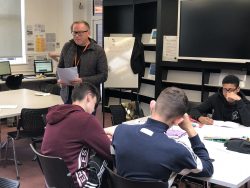
So many immensely dedicated staff at Bushey Meads continue to go the extra mile for all the students in their care. With another 65 students attending our Study Saturday last week...
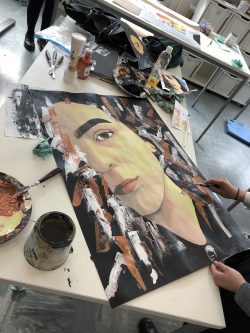
With many of the practical exams now completed a really positive momentum is building within our hardworking Year 11 cohort. Our dedicated art teachers commented that all art...

Our Study Saturday Initiative continues to be very popular with many students in Year 11 and 13 and one of the most powerful strategies to create momentum and encourage even more...
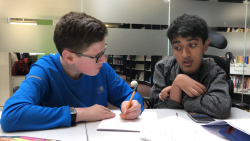
“It’s easier to concentrate.” “I get less distracted.” “I heard from my friends how useful last week’s Study Saturday was and wanted to come today to get some maths work done.”...
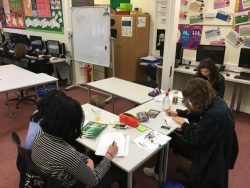
With the GCSE examinations looming, as a school we want to do all we can to support our hardworking students to ensure that they maximise their chances of success at this crucial...


It was great to see the hall full of year 11 students, parents and carers this week for the Raising Achievement Evening on Tuesday 19th March. The evening was a fabulous...

As part of the requirements for the GCSE Food Preparation and Nutrition course, the Year 11 students completed their 3 hour practical exam on Tuesday and Wednesday this week. Each...
 This week saw the start of the GCSE exam session and the first of 4 English exams-Literature paper 1.
Structure – how that piece is structured/organised- so the acts in a play, the stanzas in a poem, the Acts of a play… you can also ‘zoom in’ a bit and look at rhyme schemes/word order in poems, paragraphs in prose, stage directions (exits and entrances) etc.
Language – the choice of words and their characteristics – typically things like alliteration, assonance, sibilance, the linguistic history of a word, onomatopoeia... but also things like semantic field, or just general observations on language type e.g. ‘He uses emotive language’ to…’