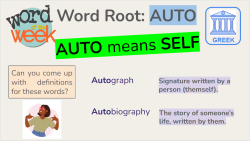
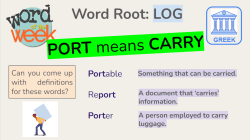
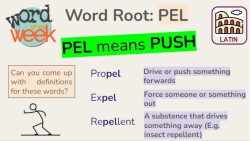
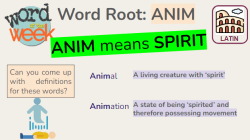
As part of our Word of the Week programme, students explore how understanding word roots can help them unlock the meanings of unfamiliar words across all their subjects. By learning where words come from, we develop stronger reading comprehension, improve our spelling, and gain confidence in using ambitious vocabulary in our writing.
Last half term, we focused on a series of Latin and Greek roots that appear in hundreds of English words. Here’s a quick recap of the roots we’ve covered so far:
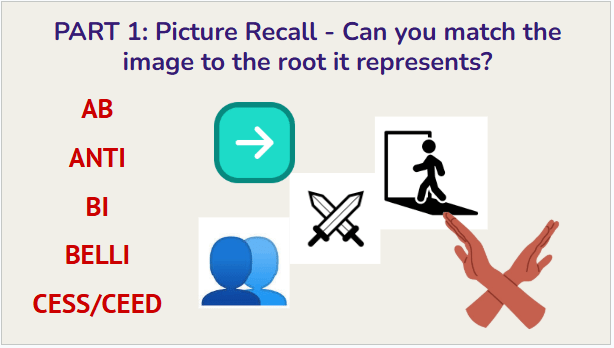
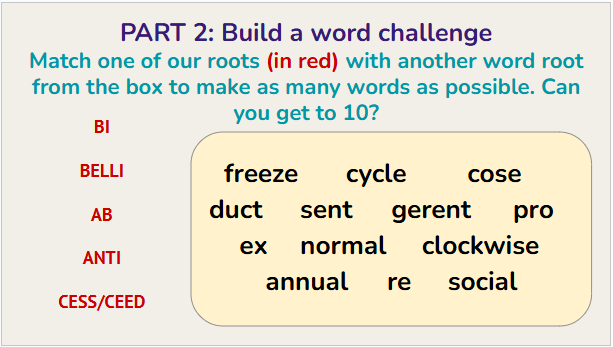
- ab- meaning from or away from (absent, abnormal, absorb)
- anti- meaning against or opposite (antibiotic, antisocial, antidote)
- bi- meaning two (bicycle, bilingual, biannual)
- belli- meaning war or conflict (rebellion, belligerent, bellicose)
- cess- / cede- meaning to go or to yield (process, exceed, accessible, succeed)
Students have been challenged each week to find and use new examples in their writing and discussions, showing how one small root can open the door to dozens of connected words.
Understanding word roots is a key part of building literacy for life – not just for English lessons, but across every subject. We encourage families to get involved too: try spotting these roots in everyday reading, and test your child to see how much they remember.
This half term, we’ll continue to grow our vocabulary tree with more roots and prefixes that help students see the stories behind words.