English
Lockdown Literacy
Encouraging your child to write is an important way to support their development both academically and as a person. As research indicates writing enables young people to express...
Filter by Category
Filter by Author


Encouraging your child to write is an important way to support their development both academically and as a person. As research indicates writing enables young people to express...

Most of us have been having a fair few of those since the lockdown began, both literal and metaphorical. Like many idioms, the origin is uncertain, although it seems to be one of...

This week: ‘The Secret History’ (1992) by Donna Tartt The story follows a group of smart, attractive Classics students at an elite university, and an outsider who finds himself...

This week: A Short History of Nearly Everything (2003) by Bill Bryson A nonfiction offering: In his quest to provide what the title suggests, Bryson is funny, clear and...
‘To Kill a Mockingbird’ (1960) by Harper Lee This Pulitzer Prize winning novel concerns the essential nature of right and wrong and how good and evil can coexist. Through...
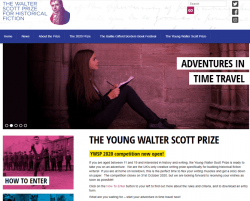
The English Faculty would like to draw your attention to another writing competition opportunity. This one has longer for you to create your masterpiece:
Last month, the English Faculty launched a themed Lockdown Poetry Competition. Mr Johnson and Miss Stanton set students the challenge to compose and submit a poem about an aspect...
‘Things Fall Apart’ (1958) by Chinua Achebe A worldwide bestseller, Amazon summarises ‘Things Fall Apart,’’ as the compelling story of one man’s battle to protect his...
Please find another opportunity for our budding writers. It is open to students aged 11-17 and is open until 31st July. The competition welcomes poems on any theme and any length.
Encouraging your child to write is an important way to support their development both academically and as a person. As research indicates writing enables young people to express feelings that they may otherwise not have the confidence to share as well as developing key thinking skills. One such piece of research is by The National Literacy Trust. In fact, they have just published their results from a survey into the writing habits of UK children aged 9-18 during lockdown (between May and June).
With over 58000 children responding to their questions the publication provides interesting reading. Overall, the survey found that 39% of children at the beginning of the year stated they enjoyed writing with 17% going on to say that they had enjoyed writing more during the lockdown period than previously. Reasons given for this included the children having more time to write, greater access to digital forms of writing, and wellbeing. Indeed, 41.3% of the children surveyed found that writing made them feel better. 79% of these children had chosen creative writing expressing themselves through letters and short stories. In examining the survey, it was apparent that lockdown had a significant impact on children’s writing especially for those who said writing made them feel better.
 During the lockdown, these children reported being five times more likely to write poems and four times more likely to write a diary than their peers. The importance of creative writing for children in terms of the positive impact that it has on their mental health, therefore, appears to be supported by the National Literacy Trust Survey 2020.