English
English Revision
This week saw the start of the GCSE exam session and the first of 4 English exams-Literature paper 1. Well done year 11-all your hard work has paid off! Now is the time to ride on...
Filter by Category
Filter by Author



This week saw the start of the GCSE exam session and the first of 4 English exams-Literature paper 1. Well done year 11-all your hard work has paid off! Now is the time to ride on...
It was great to join Mr Dowty’s Year 8 History lesson on Thursday of this week as the students explored what life was like for black americans after slavery – a hugely...

NEWS The last 2 weeks have been a very busy time for the PE and Health Faculty with practical moderations for GCSE PE and A Level PE as well as verification meetings for the...

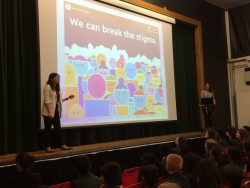
BMS have celebrated Mental Health Awareness Week over the past five days as we wish to show our support for better mental health. Good mental health is important for a whole...


With 1 in 4 students suffering some form of anxiety, worry and symptoms of mental health in any one year, coupled with the huge rise in the potentially damaging use of social...

So many immensely dedicated staff at Bushey Meads continue to go the extra mile for all the students in their care. With another 65 students attending our Study Saturday last week...

Our Friday Faculty Focus in Staff Briefing last week was led by our hard working and dedicated Head of Faculty for Foreign Languages Mrs Charles. Sharing some excellent practical...

 This week saw the start of the GCSE exam session and the first of 4 English exams-Literature paper 1.
Structure – how that piece is structured/organised- so the acts in a play, the stanzas in a poem, the Acts of a play… you can also ‘zoom in’ a bit and look at rhyme schemes/word order in poems, paragraphs in prose, stage directions (exits and entrances) etc.
Language – the choice of words and their characteristics – typically things like alliteration, assonance, sibilance, the linguistic history of a word, onomatopoeia... but also things like semantic field, or just general observations on language type e.g. ‘He uses emotive language’ to…’