Men’s Mental Health Awareness Month
Why we’re shining a light on men’s mental health As we recognise Men’s Mental Health Awareness Month, it’s vital to remember that while mental health affects everyone, there are...
Filter by Category
Filter by Author
Why we’re shining a light on men’s mental health As we recognise Men’s Mental Health Awareness Month, it’s vital to remember that while mental health affects everyone, there are...
Posted by Tracy Greenwood
As our students commute to and from school using public transport, it’s important to remind them—and support them—in traveling safely and responsibly. Encouraging good habits on...
Posted by Tracy Greenwood
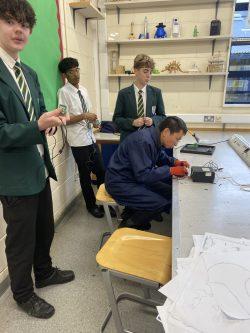
Year 8 have been busy learning about circuits. It was great to see them putting all the theory into action. The enthusiasm from the students about how great their teacher was and...
Posted by Tracy Greenwood
On Wednesday we welcomed the Skin Deep Theatre Company into school. Year 9, 10 and 11 watched their performance which tackled some hard hitting themes affecting the lives of...
Posted by Tracy Greenwood
Self‑harm among teenagers is a growing concern in the UK. As they negotiate emotional, social, and academic pressures, many young people feel overwhelmed and struggle to find...
Posted by Tracy Greenwood
The Knife Angel is a national monument made of over 100,000 knives surrendered to police services across Britain serving as a stark and emotive reminder of the dangers and impact...
Posted by Tracy Greenwood
For all year groups we are required to pass on certain information to Hertfordshire Services For Young People (SFYP). SFYP Hertfordshire are the local government’s information and...
Posted by Tracy Greenwood
At Bushey Meads, we believe that learning extends far beyond the classroom. Our school motto—Respect, Responsibility, and Relationships—guides everything we do, including the...
Posted by Tracy Greenwood
The Year 10 have made an impressive start to their options subjects. It was great to visit them in class and hear them talk passionately about what they were doing and how they...
Posted by Tracy Greenwood
Vape Awareness Week – Promoting Health and Safety Among Our Students Next week we will be holding a Vape Awareness Week as part of our ongoing commitment to promoting the health...
Posted by Tracy Greenwood
As we recognise Men’s Mental Health Awareness Month, it’s vital to remember that while mental health affects everyone, there are particular challenges faced by boys and men — including teen boys — which parents of secondary-school pupils should be aware of. As a school we recognise the need to support all our staff and students in maintaining positive mental health, recognising when someone is struggling with their mental health and sign posting them to support.
Here are some key facts:
Around 12.5% of men in England are estimated to have a common mental health disorder.
In England, men make up three-quarters of all suicides, meaning men are roughly three times more likely than women to die by suicide.
Among children and young people aged 8-25 in England in 2023, about 1 in 5 (20%) had a probable mental disorder.
In work contexts, an average of 191,000 men a year report stress, depression or anxiety caused or made worse by their work (about 1.2% of working men) in the UK.
A survey found that 40% of men have never spoken to anyone about their mental health.
These numbers show that while girls and young women often report higher rates of certain mental health conditions, men and boys face a unique set of risks — and many are less likely to reach out for help.
Understanding the “why” helps parents to support better and respond more effectively.
1. Social and cultural expectations
From a young age, boys may be exposed to messages about stoicism, “manning up,” or hiding emotional vulnerability. These norms can discourage open discussions about feelings, leading to avoidance of help.
2. Under-reporting and help-seeking barriers
Men are less likely to access psychological therapies. For instance, only about 36% of referrals to NHS talking therapies are for men. When the behaviour is external (anger, withdrawal, substance use) rather than internal (quiet sadness), it may also be missed or mis-interpreted.
3. Different patterns of distress
Men and boys might express distress through behaviours like substance misuse, risk-taking, aggression or physical symptoms rather than traditional signs of depression.
4. Life pressures
For adult men, work, finances, health and social role pressures are top causes of stress. One survey found work-related pressure (32%) and financial pressures (31%) were the leading causes of men’s mental health issues. Teen boys may also face their own pressures — academic expectations, social media, identity, peer pressure, body image, and transition to adulthood.
5. Silence and stigma in youth
Young men may feel that seeking help is a sign of weakness or that their problems are less legitimate. Without supportive prompting from parents, teachers or peers, issues may build quietly.
As a parent of a secondary school pupil, you play a crucial role. Here are practical ways you can help:
Listen and validate
Create open, non-judgemental opportunities to talk: “How have you been feeling this week?” “What’s been on your mind?”
Validate their experience: “I can see that must be tough for you,” rather than “Just cheer up” or “It’s nothing.”
Encourage a “feelings language” rather than expecting them to handle everything alone.
Model healthy help-seeking
Share your own emotional struggles or times when you’ve reached out for help (without oversharing).
Make it clear: reaching out is a strength.
Encourage small steps: speaking to a friend or teacher, using an online service, or seeing a GP if needed.
Promote regular routines and self-care
Get good sleep, regular exercise, balanced eating — these all support mental health.
Encourage hobbies, time with friends, digital breaks, non-screen activities.
Help them identify when they’re heading into overwhelm: poor sleep, irritability, withdrawal, substance use.
Watch for warning signs
These could include:
Significant mood change or irritability
Sleep problems (too much or too little)
Withdrawal from friends, family, activities
Increased substance use or risk-taking behaviour
Talk of hopelessness, being a burden, or self-harm
If any of these occur, act early and gently encourage professional support.
Encourage connection and purpose
Support involvement in clubs, sports, volunteering or activities where they feel competence and belonging.
Foster positive peer relationships and let them know you’re there for them — even when they say “I’m alright”.
Stay informed and calm
Educate yourself about mental health so you can recognise when things are escalating.
Keep communication open and regular — not just crisis points.
Here are some helpful websites and services:
YoungMinds – Mental health statistics for children & young people:Young MInds
Mind – Mental health facts & support:MInd
For urgent support: In the UK, if someone is in crisis, call 999 or go to A&E, or if available, text SHOUT to 85258 (24/7) for free confidential support.
Pick a time this week (maybe over dinner or driving to/from school) to ask your child how they are, specifically about how they are feeling and coping.
Share with them one resource (e.g., YoungMinds website) and suggest you both look at it together if they like.
If your teen is involved in an activity, ask how it’s going — is it a place they feel comfortable, valued and connected? If not, consider exploring other clubs or interests.
Model an open attitude: acknowledge your own stressors and what you do to cope.
If you spot any worrying signs (mood change, withdrawal, talk of not coping) don’t wait — gently raise the subject, seek conversation, and consider professional support if needed.
Thank you for reading and engaging with this important topic. By encouraging open conversation, modelling help-seeking and supporting your teen’s mental health foundations, you help build resilience and reduce the risk of serious issues. Together, we can help our young men feel seen, supported and strong in their emotional lives.

Looking after children’s mental health is more important than ever. The South West Herts Partnership has put together a helpful guide full of practical tips and advice to support...